This is the text of a ‘Perspectives’ piece, broadcast on Radio National in February
2006
It was one of those quintessentially Australian beach shacks of the late fifties and early
sixties. The garden smelt of decomposing seaweed, the kitchen linoleum was endlessly
gritty with sand and every available piece of shelf space was adorned with shells and the
like - flotsam and jetsam of other families’ holidays.
There was the inevitable bookshelf and, alongside a copy of RM Ballantyne’s “Coral
Island” - in impossibly small print - and a couple of Biggles’ yarns, I found a collection
of Australian short stories featuring one of Henry Lawson’s most famous, “The Drover’s
Wife”.
I was about 10 and I was transfixed by someone who could describe the Australian
landscape exactly as I saw it - and more importantly – felt it. This chance encounter
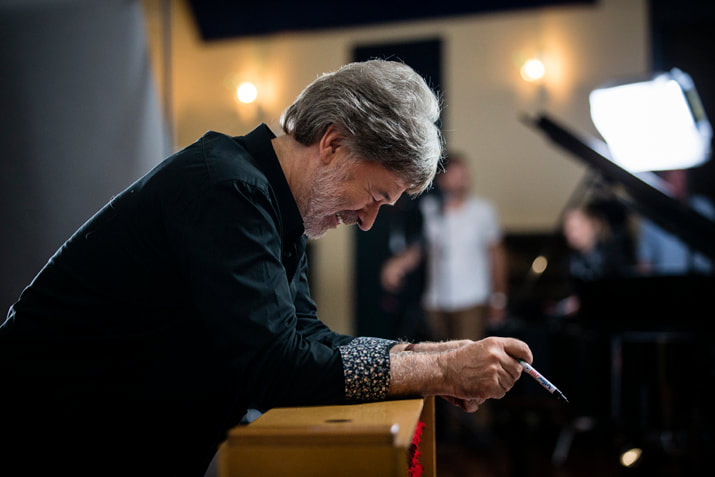
sparked a lifelong interest in the life and work of Henry Lawson, culminating in 2005 in
the recording of an album of songs drawn from his poems. A number of Australia’s finest
musicians and singers joined me in the project, including Russell Morris, Mike Rudd,
Rob Hirst, Shane Howard and Broderick Smith.
Response to the album has been illuminating. In the three months since its release, the
Lawson album has been received warmly and has been the subject of genuinely
enthusiastic reviews and commentary. It has also been politely and, in some cases,
pointedly ignored. A number of our nation’s newspapers gave the Lawson project terrific coverage. Our one national daily, on the other hand, found itself unable to do more than publish a dismissive little paragraph in a gossip column. Many radio stations across
Australia, commercial and ABC, have been fulsome in their support. Some broadcasters
with a self-professed commitment to Australian culture have turned a deaf ear. Television thus far, has ignored it, including those programs you might have expected to be interested in Lawson.
But why are we surprised? This is the country in which that irritating Crazy Frog song
was the fourth most popular in Australia in 2005.
The sad truth is that Lawson is great Australian writer whose name is widely known but
whose work, generally, isn’t.
Rather than literature, Australians are fixated on sport and reality TV. A young man kicks
a ball between two white posts on a Saturday afternoon and the southern half of the
continent genuflects as one. Another young man wins a few sets of tennis one evening
and suddenly he’s a contender for Australian of the Year. Around the water cooler in
office buildings all over the country, people can tell you which wide-eyed aspirant
popstar survived the most recent Australian Idol elimination. But ask them to distinguish
between a Lawson poem and a Paterson poem and chances are you’ll be disappointed.
We have so little regard for our own history and heritage that lots of us sit around
watching formulaic reality crap on television thinking it’s an accurate reflection of who
and what we are. If it is, God help us.
In contrast - and not that I have ever been a big fan of America - Americans are generally
more familiar with, and respectful of, their poets and writers than we are. Again, in
America, it’s accepted that musicians and songwriters improve with age. In Australia, themusic industry chiefs quickly shuffle the older artists off the stage in favour of the bright young things, consigning those of us with streaks of grey in our hair to the discount bins and the occasional nostalgia concert.
So, as well as reacquainting Australians with one of our national literary treasures, I also
wanted to acknowledge some of Australia’s real musical heroes.
It is vital that new waves of writers and musicians come through, absolutely. But the
performances of people like Russell Morris, Mike Rudd and Broderick Smith on the
Lawson album prove that Australia’s older artists still have much to offer.
In recent years, some people have tended to dismiss Lawson’s verse as simple, inelegant
and blinkered. Though true that Lawson’s poetry lacked technical finesse, the best of his
verse was marked by passion, vision and a moral eloquence.
In the best tradition of a fearless Australian sense of justice and fair play, poems like “Faces in the Street” and “Second Class Wait Here” still have important work to do as songs of social protest - especially in John Howard’s Australia of 2006.