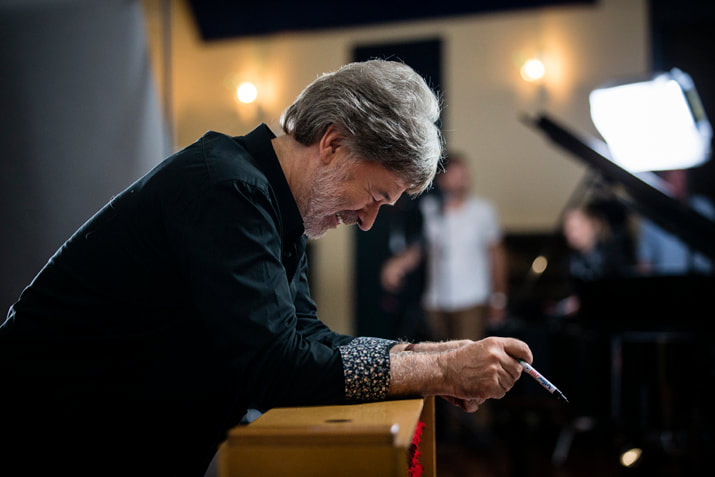
“So I heard on the radio you and your mates did an album of songs based on Henry Lawson poems.”
Mouth full of beer, I could only nod.
“Mate, I love Henry Lawson,” my drinking mate continued, sipping from his glass. “The Man from Snow River is one of my favourite poems of his...”
“Yeah, well, actually that was written by Banjo Paterson.” Once an English teacher, always an English teacher.
“Yeah? Naah. I always thought it was Lawson. Never mind.”
This recent exchange – and the fact that the Australianisms that pepper my speech are, more often than not, met with blank, uncomprehending stares, depresses me to the core of my being. As does the dim-eyed apathy with which we view the demise of our unique and endearing national identity.
It is hardly a matter for national pride but most people can tell you which poor, exploited soul just got kicked out of the Big Brother House or which wide-eyed, aspirant popstar survived the Australian Idol elimination. But realistically, few of us can distinguish between the work of two of our best-known poets.
I fear that the diminution of our national culture and identity in recent decades has allowed us to forget who we are, where we came from and where we should be going.
We fondly imagine we are a nation deeply imbued with the ethos of the bush, the beach, egalitarianism and mateship. We like to think we are laconic and ironic and that our unique brand of English sets us apart. Once maybe. These days, it’s “Hey! Have a nice day” and “Hey! How ya doin’?”. Our children dress like Harlem street gangsters and listen to their music - which has precisely zero cultural relevance. Many of our own singers still warble away in an affected, mid-Atlantic accent that has nothing to with the way they speak. The worse thing is that they’re unaware of it.
This year is the 40th anniversary the Battle of Long Tan, the signature Australian military engagement of the war in Vietnam. In this battle, about 108 young Australian soldiers held off approximately 2500 Viet Cong and North Vietnamese soldiers for over four hours in appalling weather.
At one stage of the battle, two RAAF chopper crews flew low, over the tree-tops, into the battle zone. Despite being very vulnerable enemy fire, they hovered over D Company to drop desperately needed ammunition to their mates. Australian reinforcements finally arrived some hours later and the enemy retreated. Next morning 245 Viet Cong and NVA bodies were found in the battle area. In contrast, 18 Australians were killed and 24 were wounded.
I like to think the Battle of Long Tan bore all the hallmarks of the Anzac tradition – solid mateship and a grim determination in the face of overwhelming odds. It’s worthy of note here that of the 50,000 Australians who served in Vietnam there were only 6 MIAs. Australians in Vietnam took the view that when it was ‘home time’, everyone got on the chopper, dead or alive. The number of Australian MIAs is in stark contrast to the number of American MIAs.
I can’t help wondering whether the erosion of those qualities that distinguished our soldiers at Long Tan has contributed to a sense of national resignation regarding Howard’s industrial relations legislation, for instance. In years gone by, I suspect Australia’s firm adherence to the idea of the fair go would have meant the Coalition’s IR legislation didn’t even make it out the door of the Cabinet room. If it did, I know what my father and his mates would have said about it – and it wouldn’t bear repeating here.
I lived in London for about six months in 1985. At the time Paul Hogan featured in a suite of Fosters’ ads that were distinctly Australian - witty, disrespectful, laconic and bitterly ironic in the way only Australians can be. I was proud then. Not now.
The rising tide of globalism and the accompanying tsunami of cheap, cultural imports have swamped our national identity. Our vernacular, our dress, our manner, our way of relating to each other: there is evidence to suggest that all these things have been either corrupted or diluted to the point where they are beyond recognition. The cultural flotsam that washes up on our shores - and that we embrace so readily - renders us all but incapable of prescribing for ourselves the sort of future we want and the sort of people we want to be. We have so little regard for our own history and heritage that we sit around watching formulaic reality crap on television thinking it’s an accurate reflection of who and what we are. I despair that we continue to let our Prime Minister tell us what is un-Australian and what is not.
I have no answers. My one consolation is the old Australian proverb:
“The situation is hopeless but not serious.”